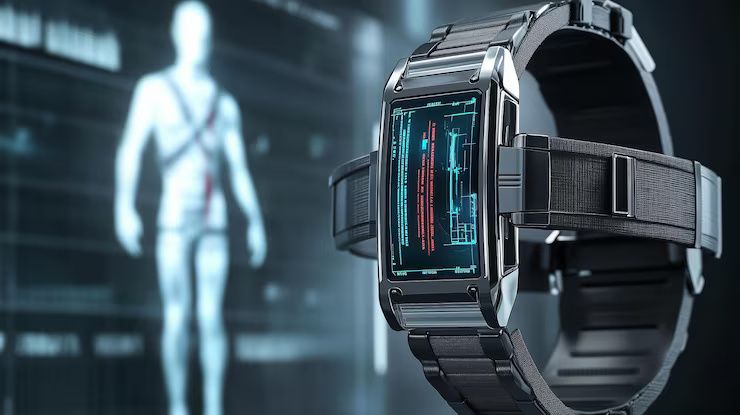
Medical wearable sensors are compact sensing technologies designed to collect physiological, biochemical, or movement-related information from or around the human body. They can be incorporated into wearable devices such as patches, watches, bands, textiles, chest straps, and specialized medical monitoring systems.
These technologies combine biosensors, electronics, wireless communication, data processing, and health-monitoring software. Depending on their design and intended use, wearable sensors can measure parameters such as heart rate, body temperature, oxygen saturation, movement, respiratory patterns, glucose-related information, and other physiological signals.
Context
What Are Medical Wearable Sensors?
Medical wearable sensors are sensing devices designed to collect health-related information while being worn on the body. Some systems continuously monitor physiological parameters, while others collect measurements at defined intervals.
A wearable system may include a sensing element, signal-conditioning electronics, a processor, wireless connectivity, a power source, and software for displaying or analyzing the collected information.
How Wearable Biosensors Work
A typical wearable sensor follows several stages:
- A sensor detects a physiological or biochemical signal.
- The signal is converted into an electrical or digital representation.
- Signal-processing electronics remove or reduce unwanted noise.
- A processor interprets the measurement.
- Data is transmitted to a smartphone, gateway, clinical platform, or dedicated device.
- Authorized users can review the resulting information.
The exact architecture depends on the sensor technology and intended healthcare application.
Major Types of Medical Wearable Sensors
| Sensor Type | Primary Measurement | Example Applications |
|---|---|---|
| Optical Sensor | Blood-related optical signals | Heart-rate and oxygen monitoring |
| ECG Sensor | Electrical cardiac activity | Cardiac monitoring |
| Temperature Sensor | Body temperature | Physiological monitoring |
| Accelerometer | Body movement | Activity and motion analysis |
| Gyroscope | Orientation and rotation | Movement assessment |
| Pressure Sensor | Pressure or force | Wearable rehabilitation systems |
| Biochemical Sensor | Selected biological substances | Research and selected monitoring |
| Respiration Sensor | Breathing patterns | Respiratory monitoring |
| EMG Sensor | Muscle electrical activity | Neuromuscular assessment |
| Sweat Sensor | Selected biochemical markers | Research and physiological studies |
Optical Biosensors
Optical sensors can use light to detect changes associated with blood flow and other physiological characteristics.
Photoplethysmography, commonly abbreviated as PPG, is used in various wearable devices to detect changes in blood volume beneath the skin. PPG signals can support measurements such as pulse rate and, in appropriate systems, estimates related to blood oxygenation.
ECG Wearable Sensors
Electrocardiography sensors measure electrical activity associated with the heart. Wearable ECG systems can collect cardiac electrical signals through electrodes positioned against the skin.
Depending on the device and regulatory authorization, ECG-capable wearables may be used for specific monitoring functions.
Temperature Sensors
Wearable temperature sensors can measure skin or body-related temperature depending on sensor placement and device design.
Temperature information can be useful in physiological monitoring, although skin temperature is not necessarily equivalent to core body temperature.
Motion Sensors
Accelerometers and gyroscopes detect movement, acceleration, orientation, and changes in body position.
They can contribute to activity monitoring, gait analysis, rehabilitation, fall-related research, and other movement applications.
Importance
Why Medical Wearable Sensors Matter
Wearable sensors can collect physiological information outside traditional clinical environments. This can provide additional data between clinical visits or during everyday activities.
The usefulness of a wearable measurement depends on sensor accuracy, placement, calibration, algorithms, user behavior, and the specific clinical or wellness purpose.
Continuous Health Monitoring
Some wearable systems can collect data over extended periods. Continuous or frequent measurements can reveal changes that may not be captured during a single measurement in a clinical setting.
However, continuous data does not automatically mean that every measurement is suitable for medical diagnosis.
Remote Patient Monitoring
Remote patient monitoring systems can transmit selected health information to healthcare professionals through connected platforms.
Wearable sensors can form one component of such systems, alongside communication networks, software platforms, clinical workflows, and appropriate data-security controls.
Personalized Health Information
Wearable technologies can provide individuals with information about selected physiological measurements and activity patterns.
Interpretation should account for the device's intended use, measurement limitations, and the difference between wellness information and clinically validated measurements.
Healthcare Research
Wearable sensors are increasingly used in research studies involving movement, sleep, cardiovascular signals, rehabilitation, and other physiological characteristics.
Large datasets from wearable devices can support research into patterns that may be difficult to capture through occasional clinical measurements.
Health Monitoring Systems
Wearable ECG Systems
ECG-capable wearable devices can collect electrical cardiac signals through electrodes. Depending on the device and regulatory status, these systems may support specific cardiac monitoring functions.
Signal quality can be affected by movement, electrode contact, placement, and electrical interference.
Pulse and Oxygen Monitoring
Optical sensing technologies can estimate pulse-related measurements and, in suitable devices, oxygen saturation.
These measurements can be influenced by motion, skin contact, ambient conditions, circulation, and device design.
Wearable Temperature Monitoring
Temperature sensors can continuously or periodically record temperature-related measurements.
Applications include research, physiological monitoring, and selected medical-device applications.
Respiratory Monitoring
Wearable respiratory sensors can detect changes in chest movement, airflow-related signals, or other characteristics associated with breathing.
These systems can be used in research and selected monitoring applications.
Biochemical Wearables
Biochemical wearable sensors are designed to detect specific substances in biological fluids such as sweat or interstitial fluid.
Research in this area includes sensors for metabolites, electrolytes, and other biochemical markers. Measurement reliability and clinical validation remain important considerations.
Manufacturers and Technology Ecosystem
The medical wearable sensor market includes medical-device manufacturers, electronics companies, sensor developers, semiconductor producers, software providers, and specialized healthcare technology companies.
Manufacturers may specialize in sensor components, complete wearable devices, clinical monitoring systems, or data platforms.
When evaluating a medical wearable sensor manufacturer, organizations can consider:
- Intended use
- Sensor technology
- Measurement range
- Accuracy specifications
- Regulatory status
- Skin-contact materials
- Data connectivity
- Battery characteristics
- Software capabilities
- Interoperability
- Cybersecurity controls
- Clinical validation
Regulatory status should be evaluated for the specific device and intended use rather than inferred from a general product category.
Healthcare Applications
Cardiac Monitoring
Wearable ECG and optical sensors can collect cardiovascular information for selected monitoring applications.
Healthcare professionals may use appropriate data alongside clinical history, examination, and other diagnostic information.
Diabetes-Related Monitoring
Certain wearable technologies can measure glucose-related information using specialized sensing methods. Continuous glucose monitoring systems are examples of regulated medical technologies that use sensors placed on or beneath the skin.
The exact measurement technology and approved use depend on the specific device.
Rehabilitation
Motion sensors can support rehabilitation by measuring movement, range of motion, activity patterns, or gait characteristics.
Data can assist with tracking changes over time when the system has been appropriately validated for the intended application.
Elderly Care
Wearable sensors can support selected monitoring and safety applications by tracking movement, activity, location, or physiological parameters.
Such systems should incorporate appropriate privacy, consent, and data-security practices.
Sports and Physiological Research
Wearable sensors are widely used for exercise and physiological research. Measurements can include heart rate, motion, temperature, respiratory characteristics, and other variables.
Research-grade systems may have different requirements from consumer wellness devices.
Sleep Monitoring
Wearable devices can collect movement, heart-rate-related signals, temperature information, and other measurements associated with sleep.
Some systems provide estimates of sleep stages or other sleep characteristics through algorithms. These estimates should be distinguished from measurements obtained through clinical sleep studies.
Recent Updates
Flexible and Stretchable Sensors
Research into flexible electronics is producing sensors that can conform more closely to the skin. Flexible substrates may improve comfort and enable new wearable configurations.
Applications under investigation include physiological monitoring, rehabilitation, and biochemical sensing.
Smart Textiles
Electronic components can increasingly be integrated into fabrics. Smart textiles may incorporate conductive fibers, pressure sensors, temperature sensors, or motion-detection elements.
Challenges include durability, washing, signal stability, skin compatibility, and manufacturing scalability.
AI-Based Health Data Analysis
Artificial intelligence can analyze large datasets generated by wearable sensors. Potential applications include pattern recognition, anomaly identification, activity classification, and personalized data interpretation.
AI-generated information should be evaluated according to the device's intended use and validation evidence.
Remote Monitoring Platforms
Wearable sensors can increasingly connect with cloud-based healthcare platforms and electronic health systems.
Interoperability allows selected information to move between devices, applications, and clinical systems when appropriate technical and privacy controls are in place.
Improved Miniaturization
Advances in semiconductor technology, flexible electronics, batteries, and low-power communication are allowing wearable systems to become smaller and more energy efficient.
Miniaturization can support new device configurations while creating additional requirements for thermal management, battery safety, and component reliability.
Laws or Policies
Medical Device Regulation
Medical wearable sensors intended for diagnosis, monitoring, prevention, or treatment may be subject to medical-device regulations.
Requirements vary according to jurisdiction, device classification, intended use, risk level, and technological characteristics.
Clinical Validation
Medical devices may require evidence demonstrating that their measurements and intended functions are sufficiently accurate and reliable for their authorized use.
Clinical validation requirements depend on the device and applicable regulatory framework.
Data Privacy
Wearable health systems can generate sensitive personal information. Organizations handling such data need appropriate privacy, security, access-control, and data-retention practices.
Applicable privacy requirements vary by jurisdiction and the nature of the information collected.
Cybersecurity
Connected medical wearables can communicate with smartphones, gateways, cloud platforms, and healthcare systems.
Security measures can include authentication, encryption, secure software development, vulnerability management, access controls, and appropriate update mechanisms.
Biocompatibility
Devices that contact skin or enter the body may require evaluation of material compatibility and potential biological effects.
The requirements depend on the type and duration of contact and the intended medical use.
Tools and Resources
Sensor Evaluation Equipment
Laboratories can use electrical measurement instruments, calibration equipment, environmental chambers, and physiological test systems to evaluate sensor performance.
Data Analytics Platforms
Analytics software can process wearable sensor data, identify trends, and support research or monitoring workflows.
Mobile Health Applications
Mobile applications can receive information from wearable devices and present measurements to authorized users.
Clinical Data Platforms
Healthcare organizations can use connected platforms to integrate selected wearable measurements into broader remote-monitoring workflows.
Regulatory Resources
Manufacturers and healthcare organizations should consult applicable medical-device regulations, technical standards, clinical guidance, privacy requirements, and cybersecurity frameworks relevant to the device.
FAQs
What are medical wearable sensors?
Medical wearable sensors are body-worn sensing technologies designed to collect physiological, biochemical, or movement-related information. They can be incorporated into patches, watches, bands, textiles, and specialized medical devices.
What can medical wearable sensors measure?
Depending on the technology, wearable sensors can measure heart-related electrical signals, pulse, oxygen-related optical signals, temperature, movement, respiration, muscle activity, pressure, and selected biochemical markers.
Are wearable sensors medical devices?
Some wearable sensors and devices are regulated medical devices, while others are intended for general wellness or fitness applications. Regulatory status depends on the device's intended use and jurisdiction.
How are wearable biosensors used in healthcare?
They can support selected applications involving remote monitoring, cardiac measurements, rehabilitation, physiological research, activity assessment, and other health-related workflows.
What should healthcare organizations consider when evaluating manufacturers?
Important factors include intended use, measurement accuracy, regulatory status, clinical validation, interoperability, cybersecurity, data privacy, materials, battery performance, and software capabilities.
Conclusion
Medical wearable sensors combine biosensing, electronics, wireless communication, and data analysis to collect health-related information outside conventional clinical settings. Technologies such as optical sensors, ECG electrodes, temperature sensors, accelerometers, gyroscopes, biochemical sensors, and respiratory sensors support a broad range of monitoring and research applications.
Advances in flexible electronics, smart textiles, AI-based analysis, remote monitoring, miniaturization, and connected healthcare platforms are expanding the possibilities for wearable sensing. At the same time, accuracy, clinical validation, privacy, cybersecurity, regulatory status, and appropriate interpretation remain important considerations when evaluating medical wearable technologies.